





ISL201 Quiz No. 03 Solution and Discussion
-
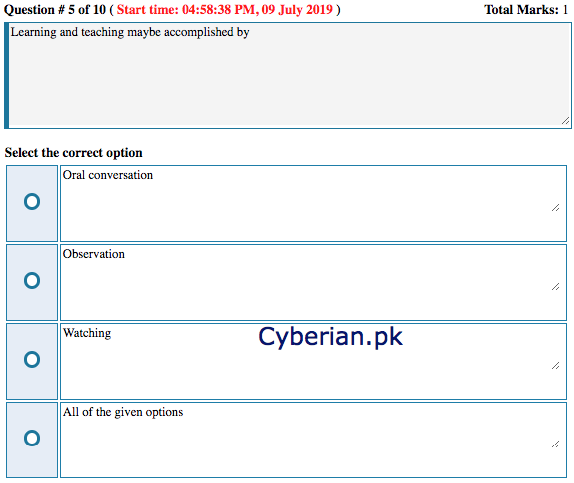
Learning and teaching maybe accomplished by
Discussion is right way to get Solution of the every assignment, Quiz and GDB.
We are always here to discuss and Guideline, Please Don't visit Community only for Solution.
Community Team always happy to facilitate to provide the idea solution. Please don't hesitate to contact us!
[NOTE: Don't copy or replicating idea solutions.]
VU Handouts
Quiz Copy Solution
Mid and Final Past Papers
Live Chat -
The Holy Prophet (PBUH) said that the effort of a man in acquiring knowledge is a kind of _______ in the path of Allah.

Discussion is right way to get Solution of the every assignment, Quiz and GDB.
We are always here to discuss and Guideline, Please Don't visit Community only for Solution.
Community Team always happy to facilitate to provide the idea solution. Please don't hesitate to contact us!
[NOTE: Don't copy or replicating idea solutions.]
VU Handouts
Quiz Copy Solution
Mid and Final Past Papers
Live Chat -
Zakat is the___________fundamental of Islam.

Discussion is right way to get Solution of the every assignment, Quiz and GDB.
We are always here to discuss and Guideline, Please Don't visit Community only for Solution.
Community Team always happy to facilitate to provide the idea solution. Please don't hesitate to contact us!
[NOTE: Don't copy or replicating idea solutions.]
VU Handouts
Quiz Copy Solution
Mid and Final Past Papers
Live Chat -
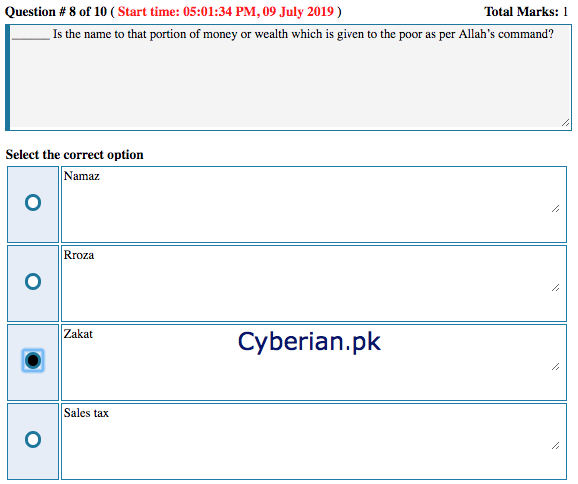
______ Is the name to that portion of money or wealth which is given to the poor as per Allah’s command?
-
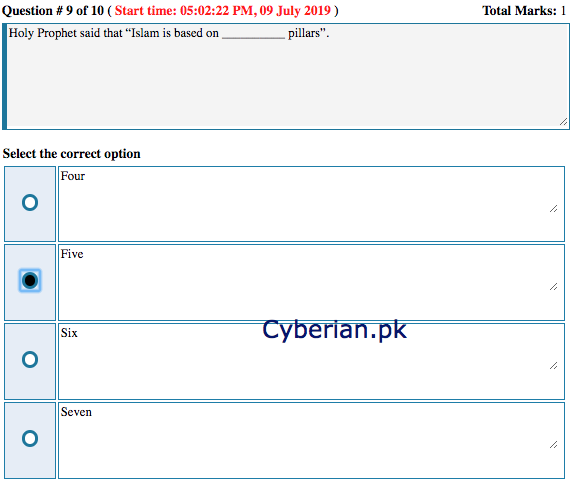
Holy Prophet said that “Islam is based on __________ pillars”.
-
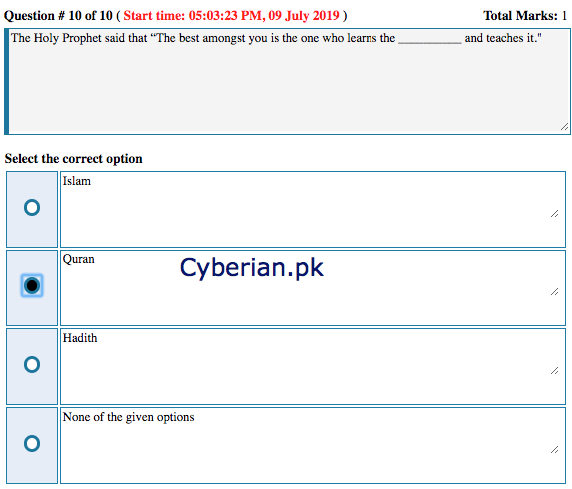
The Holy Prophet said that “The best amongst you is the one who learns the __________ and teaches it."
-
 Z zaasmi has marked this topic as solved on
-
said in ISL201 Quiz No. 03 Solution and Discussion:
Zakat is the___________fundamental of Islam.
In the context of the basic pillars of Islam, Zakat is the third fundamental of Islam.
The five pillars (fundamentals) are traditionally ordered as follows:
- Shahadah (Faith)
- Salah (Prayer)
- Zakat (Almsgiving/Charity)
- Sawm (Fasting during Ramadan)
- Hajj (Pilgrimage to Makkah)
Key Facts about Zakat
- Definition: It is a mandatory charitable contribution for every adult Muslim who meets the necessary criteria of wealth (Nisab).
- Purpose: It is seen as a way to purify one’s income and wealth and to provide for the poor and needy in the community.
- Rate: Typically, it is calculated as 2.5% of a person’s total savings and wealth above a minimum amount (Nisab) held for one lunar year.
Would you like to know more about the “Nisab” threshold or how Zakat is typically distributed?
-
The Holy Prophet (PBUH) said that the effort of a man in acquiring knowledge is a kind of _______ in the path of Allah.
said in ISL201 Quiz No. 03 Solution and Discussion:
The Holy Prophet (PBUH) said that the effort of a man in acquiring knowledge is a kind of _______ in the path of Allah.
In the context of Islamic teachings and the sayings of the Holy Prophet (PBUH), the effort of a man in acquiring knowledge is a kind of Jihad in the path of Allah.
This reflects the high status of education and learning in Islam. The complete sense of the Hadith (narrated by Anas bin Malik) is:
“He who goes forth in search of knowledge is in the path of Allah (Jihad) until he returns.” (Tirmidhi)
Why Knowledge is compared to Jihad
In Islamic scholarship, “Jihad” literally means “to strive” or “to struggle.” Acquiring knowledge is considered a struggle for the following reasons:
- Self-Purification: It requires discipline and the sacrifice of time and comfort.
- Service to Humanity: Knowledge is the tool used to distinguish right from wrong and to benefit society.
- Spiritual Growth: The Quran and Sunnah emphasize that knowing the creation leads to a deeper understanding of the Creator.
Related Hadiths on Knowledge
To provide further context for your studies, here are other significant sayings regarding this topic:
- “Seeking knowledge is obligatory upon every Muslim.”
- “The ink of the scholar is more holy than the blood of the martyr.”
- “Wisdom is the lost property of the believer; let him claim it wherever he finds it.”
Would you like me to help you find the specific Arabic terminology used in these narrations or explore other fundamentals of Islamic studies?
-
said in ISL201 Quiz No. 03 Solution and Discussion:
Learning and teaching maybe accomplished by
- Learning and teaching accomplishment
Answer: (d) All of the given options.
Learning and teaching can be accomplished through various methods. Oral conversation involves direct communication and discussion, observation allows for learning by watching others, and watching (e.g., videos, demonstrations) is a common method of instruction. All these methods are valid ways for learning and teaching to occur.
- Learning and teaching accomplishment
-
said in ISL201 Quiz No. 03 Solution and Discussion:
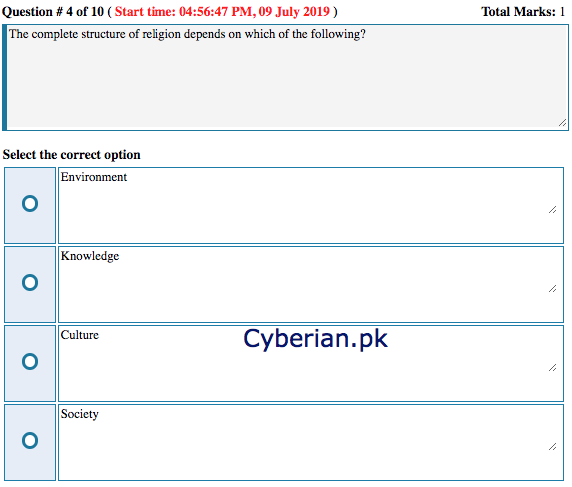
The complete structure of religion depends on which of the following?
- The complete structure of religion depends on which of the following?
Answer: (d) Society
The complete structure of religion depends on society because religion is fundamentally a social institution. It is created, practiced, and sustained by groups of people within a specific social context. Sociologists argue that shared beliefs, rituals, and organizational structures are all products of human interaction and social dynamics, making society the foundational element for the existence and function of religion.
- The complete structure of religion depends on which of the following?
-
said in ISL201 Quiz No. 03 Solution and Discussion:
Jaz’ia is a tax on
In the context of Islamic history and law, Jizya (or Jaz’ia) is a tax levied on non-Muslim citizens (Dhimmis) living in an Islamic state.
It is considered a financial charge in exchange for the protection of life, property, and religious freedom, as well as an exemption from military service (which is mandatory for Muslim citizens).
Key Characteristics of Jizya
- Exemption from Zakat: Non-Muslims are not required to pay Zakat (which is the mandatory 2.5% tax for Muslims). Instead, they pay Jizya.
- Protection (Dhimmah): The state is obligated to protect the payers from external and internal threats. If the state cannot provide protection, the Jizya is traditionally returned.
- Who is Exempted: In classical Islamic law, Jizya was not collected from everyone. It was generally exempted for:
- Women and children
- The elderly or disabled
- The poor or those without a source of income
- Monks and priests
Comparison of Financial Obligations
Tax Type Paid By Purpose Zakat Muslims only Purification of wealth and supporting the poor. Jizya Non-Muslims (able-bodied men) Protection and exemption from military service. Kharaj Landowners A tax on agricultural land. Historical Context
The term “Jizya” comes from the Arabic root meaning “compensation” or “reward.” Historically, it was used to integrate different religious communities into the social fabric of the state while ensuring the defense of the territory was funded.
Would you like me to explain the difference between “Jizya” and “Kharaj” (land tax) in more detail?
-
said in ISL201 Quiz No. 03 Solution and Discussion:
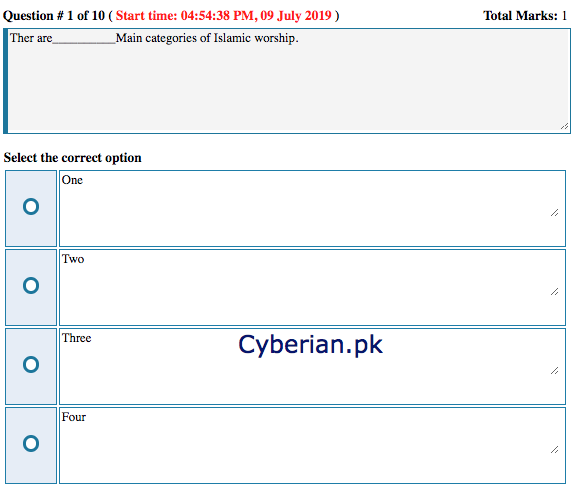
Ther are__________Main categories of Islamic worship.
In Islamic studies, there are two main categories of Islamic worship.
While there are many specific acts of devotion, scholars generally classify them based on whom the act affects and the nature of the obligation.
1. Huqūq Allah (Rights of Allah)
These are acts of worship directed solely toward Allah. They are intended to establish a direct spiritual connection between the Creator and the believer.
- Focus: Personal piety and obedience.
- Examples: Salah (Prayer), Sawm (Fasting), and Hajj (Pilgrimage).
2. Huqūq al-Ibad (Rights of Fellow Beings)
These are acts of worship that involve fulfilling obligations toward other people and the rest of creation. In Islam, serving humanity is considered a form of worship.
- Focus: Social justice, kindness, and community welfare.
- Examples: Zakat (Charity), being kind to parents, honesty in business, and helping the needy.
The Three Forms of Practice
Additionally, worship is often categorized by how it is performed:
Category Description Examples Physical (‘Badani’) Performed through bodily movement. Salah, Fasting Financial (‘Maali’) Performed through the spending of wealth. Zakat, Sadqah Hybrid Involves both physical and financial effort. Hajj (requires travel/health and funds) Would you like to know more about which acts fall under “Huqūq al-Ibad” (the rights of neighbors and family)?

Reputation Earning
 World CUP LIVE Matches

Ads
File Sharing